Party Girl: Integrating Digital Assets into Your Creative Workflow
In the modern landscape of digital creation and small business management, the efficiency of your asset pipeline often determines the speed at which you can launch products or execute campaigns. Party Girl represents a specific category of high-value digital resources designed to streamline this process. While the name might initially suggest a singular event theme, in the context of professional workflows, it functions as a versatile component within a broader ecosystem of design assets. Whether you are a freelancer managing client deliverables, an educator creating materials for students, or a small business owner launching a new product line, understanding how to integrate these files correctly is essential for maintaining quality and consistency.
This article explores the practical application of Party Girl digital files, moving beyond simple usage to discuss how they fit into real-world production environments. We will examine the technical specifications that make these assets valuable, how they interact with various printing and design platforms, and the strategic steps required to ensure seamless integration from download to final output.
The Technical Foundation of Instant Downloads
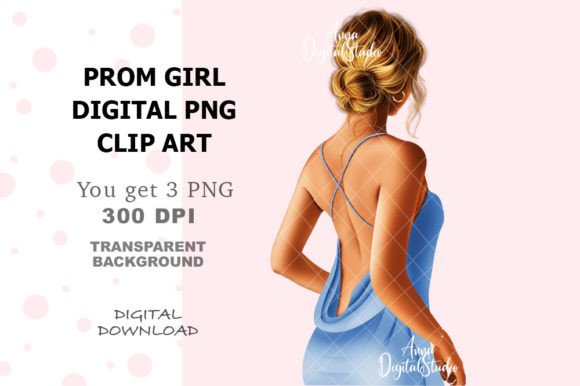
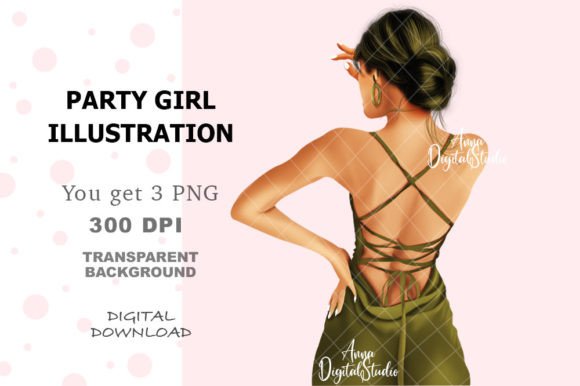
To utilize any digital asset effectively, one must first understand its underlying architecture. The listing for Party Girl specifies an instant download format containing three PNG files. This is not merely a convenience feature; it is a critical workflow determinant. Unlike physical shipping, which introduces variables like transit time, packaging damage, and inventory delays, an instant download places the asset directly into your local environment. This immediacy allows creators to test, iterate, and deploy designs without the friction of waiting periods.
The file format itself—PNG—is a cornerstone of modern graphic design workflows due to its support for transparency. A transparent background means the design exists independently of any rectangular canvas. This is particularly vital when layering graphics over different textures, colors, or backgrounds in software like Adobe Illustrator, Canva, or Procreate. For instance, placing a design on a dark-colored t-shirt versus a white ceramic mug requires the ability to isolate the artwork from a white box. Without a transparent background, you would be forced to manually remove the white space, a time-consuming process that increases the risk of errors and reduces overall efficiency.
Furthermore, the specification of RGB color mode indicates that these files are optimized for digital screens and direct-to-garment or dye-sublimation printing processes. While printers convert RGB to CMYK during the print command, starting with high-resolution RGB data ensures that the vibrant colors intended by the designer are preserved as much as possible through the conversion process. Understanding this distinction helps professionals set realistic expectations regarding color fidelity before they begin their production runs.
Integration Across Diverse Use Cases
The true value of Party Girl lies in its adaptability across multiple verticals. Because the files are provided in a standard, universally accepted format, they can be inserted into almost any creative workflow. However, the implementation strategy varies depending on the end product.
For entrepreneurs and e-commerce sellers, these assets serve as the primary input for product mockups. By importing the 8x10 inch PNG files into template software, you can instantly visualize how the design looks on phone cases, tablet covers, or glass mugs. This allows for rapid prototyping. Instead of ordering a single physical sample to check the look, you can generate dozens of digital mockups in minutes. This step is crucial for market testing; you can gauge customer interest in specific designs before committing capital to a full production run.
Educators and bloggers often use similar assets to enhance their content delivery. A Party Girl themed graphic can be embedded directly into blog posts to break up text, used as a header for a newsletter, or printed as part of a planner cover for organizational tools. In these scenarios, the lack of watermarks is a significant operational advantage. Watermarked files are unsuitable for commercial distribution or professional presentation, often requiring manual removal or re-creation. Starting with clean, watermark-free files saves hours of post-processing time.
Even in personal productivity contexts, these files have utility. Individuals creating custom planners, notepad covers, or gift cards benefit from the ability to print high-quality, personalized items at home or via local print shops. The 300-dpi resolution ensures that the final printed product remains crisp and sharp, avoiding the pixelation that occurs when low-resolution images are scaled up. This attention to detail reflects a commitment to quality control that is applicable whether you are selling a product or simply organizing your own life.
Workflow Optimization and Quality Control
Integrating digital assets into a workflow requires more than just opening the file and hitting "print." It involves a structured approach to preparation and execution. One of the most common pitfalls in digital design is assuming that what you see on your monitor will perfectly match the physical output. Variations in monitor calibration, printer ink density, and paper stock can all lead to discrepancies in color representation.
To mitigate this, a best practice is to conduct a rigorous printing test before scaling up production. This involves printing a single sheet on the exact material you intend to use for the final project. By doing so, you can identify issues such as color shifting, bleeding, or alignment problems early in the process. This proactive step prevents waste of materials and ensures that the final deliverable meets your standards. For businesses, this quality control measure protects brand reputation and reduces return rates.
Organization is another key factor. Since the download includes three distinct files, it is wise to establish a naming convention immediately upon extraction. Renaming files to reflect their specific dimensions or intended use (e.g., "PartyGirl_8x10_Mug.png") keeps your asset library tidy. This becomes increasingly important as your collection of designs grows. A disorganized folder structure leads to wasted time searching for the correct version of a file, disrupting the flow of your work.
When working with clients or collaborators, sharing these files requires clear communication about the limitations of digital formats. Explaining that the files are RGB and intended for digital or specific print methods helps manage expectations. If a client requests a CMYK version for offset printing, knowing the source format allows you to advise them on the necessary adjustments or recommend a professional pre-press service. This transparency builds trust and positions you as an expert in the field.
Long-Term Value and Scalability
The decision to invest in a digital asset like Party Girl should consider long-term scalability. Because these are non-physical, digital files, they do not degrade over time and can be reused indefinitely. Once downloaded, the asset becomes part of your permanent library, available for future projects without additional cost. This contrasts sharply with physical inventory, which occupies storage space and carries the risk of obsolescence or damage.
For creators looking to expand their offerings, the versatility of PNG files allows for easy adaptation. You can take a design originally created for a greeting card and resize it for a social media banner, a website favicon, or a large-format poster. The 8x10 inch dimension provides a solid base for many standard applications, but the vector-like nature of the PNG format (when combined with proper resizing techniques) supports expansion into larger formats. This flexibility encourages experimentation, allowing you to try new ideas without financial risk.
Moreover, the instant nature of the download aligns perfectly with agile methodologies used in modern business. Projects can start immediately upon purchase, reducing the lag between idea generation and execution. This speed is critical in fast-paced markets where trends change rapidly. Being able to produce and ship a digital or physical product within hours of a trend emerging gives you a competitive edge.
Maximizing Efficiency Through Preparation
Before diving into the design phase, taking a moment to prepare your workspace can significantly enhance the outcome. Ensure your design software is updated to handle high-resolution files efficiently. Check your system's color management settings to ensure that your monitor is displaying colors as accurately as possible. While no screen is perfect, calibrating your display to a standard sRGB profile provides a reliable baseline for making design decisions.
Additionally, having a checklist ready can streamline the process. Verify that you have the correct drivers installed for your printer if you plan to print locally. If you are using a third-party printing service, confirm their file upload requirements beforehand. Some services require specific file sizes or color profiles, and being prepared with the right documentation prevents unnecessary delays. This level of organization ensures that the transition from digital file to physical product is smooth and error-free.
Ultimately, the goal is to create a seamless bridge between the digital concept and the tangible result. By treating Party Girl not just as a static image but as a dynamic tool within your workflow, you unlock its full potential. Whether you are designing for profit, education, or personal expression, the combination of high resolution, transparency, and instant accessibility makes these files a powerful addition to your toolkit. With careful planning and attention to detail, you can transform a simple download into a polished, professional outcome that stands out in a crowded marketplace.